Monday, December 11, 2017

Music as Inspiration--Assignment #9


Play that Song

Turn on music that you love. Listen carefully.

1. How does the song make you feel?

Tap into the emotions the song conjures up. Consider the mood that the song sets. With a focus on that feeling—joy, sadness, triumph, love, regret, whatever it is—write a piece that also conveys the same emotion.

2. What do the lyrics make you think about?

Sometimes the lyrics will tell a story; try to expand on that story by writing it in prose form. Or perhaps the song gives you a portrait of a character; use that description and fill in the blanks to create your own scene. Or finally, the lyrics may take you back to a time in your past; mine that memory for inspiration and write about your own experience.

3. What kind of story would use this song as a soundtrack?

Imagine the story you are about to write will be made into a movie (we can dream, right?) and this song will be on the soundtrack. Use the song to dream up a movie-worthy plot point or to envision a new setting or character.
What type of music inspires you? Is there a specific song that really moves you?

PRACTICE

Choose a song to use as your inspiration. Listen to it start-to-finish, while keeping the questions above in mind.
Write for fifteen minutes about whatever the song inspires you to imagine. (You might have to play the song a few times on repeat!)

Tuesday, November 28, 2017

Monday, November 27, 2017

Ekphrastic Poetry Assignment #6

Assignment #6

AGENDA:


EQ: What is ekphrastic poetry?

Ekphrasis is writing about any art form, but in its modern usage, ekphrasis generally refers to poetry that reflects on visual art, and most often painting. In my classroom, I often choose one or two artists for an in-depth study. Once my students are experts about the artists, they each choose a meaningful piece of work to inspire a poem. 
http://www.scholastic.com/teachers/top-teaching/2016/04/ekphrasis-poetry-about-art
http://americanart.si.edu/education/pdf/Ekphrastic_Poetry_Lesson.pdf

http://www.english.emory.edu/classes/paintings&poems/classicscene.html

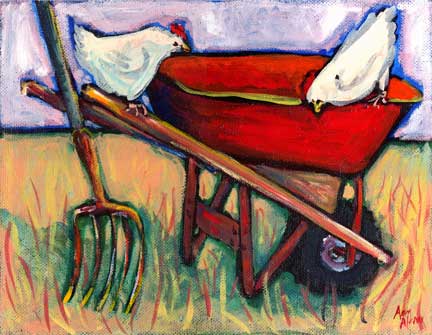
The Red Wheelbarrow


so much depends
upon

a red wheel
barrow

glazed with rain
water

beside the white
chickens.

ACTIVITY:
Students select a postcard or artwork.
Create an ekphrastic poem about your postcard using LINES and STANZAS!

Monday, November 20, 2017

How to add music to your video

1. Get a pair of headphones and listen to music on youtube.com that you think would be appropriate in the background of your video.  What will create the mood of your poem?  Think instrumental so that the lyrics do not interfere with your words).

2. Copy the url address of your song.

3. Go to listentoyoutube.com and paste in the url to the online converter program.  Follow the instructions for a download.

4. Go back to Moviemaker and choose add music from HOME.

5. In your Downloads, you should have the song converted to mp.4.  Select it.

6. Go back to Moviemaker.  You should see a green line that shows that you have added music.  Play your movie!

Wednesday, November 15, 2017

Assignment 3, 4, 5,Where I'm From Template and Poem and Video

Assignment #3 and 4 and 5  (Template and poem and video):

Where I'm From/ George Ella Lyon

AGENDA:

1. Review:
Assignment #1---MLA Heading on paper, 12 pt. Times Roman font  Writing Territories List
Assignment #2--From your list, write about one of your SPECIFIC Writing Territories ideas (at least one page double-spaced)
Print out Assignments 1 and 2 today and put in your folder


2. Begin working on "Where I'm From" poems which we will turn into a movies next week with Moviemaker by adding images and music.

FILL OUT THE TEMPLATE!

Look over Examples: https://www.youtube.com/watch?v=qG3iP08HKZA
https://www.youtube.com/watch?v=bJ0bHaFsPx8
https://www.youtube.com/watch?v=TVryvxLTIyU 

2. Show video of original poem:
https://www.youtube.com/watch?v=ZdnHl_yW1dQ 

3. HANDOUT: Where I'm From template--Write your own "Where I'm From" poem in a Word or Google Doc using the model and the template

Monday, November 13, 2017

Assignment #1 Making Lists/Assignment #2 Nonfiction

Use 12 pt. font  Times New Roman

MLA Heading (in left hand corner):

Your name
Teacher name
Course name (CW7)
Assignment/Date

Open a word document.  Put an MLA heading on top. Create a full page of YOUR Writing Territories lists.  Save your document.

Assignment #1:  Writing Territories/Making Lists for Writing Topics
Don't try to figure out what other people want to hear from you; figure out what you have to say. It's the one and only thing you have to offer. ~ Barbara Kingsolver

In Collecting Your Writing Territories, Consider . . .and Make Lists of Ideas.  Brainstorm what you can write about.  Be specific.

memories: early, earlier, and recent                                favorites, now and then

obsessions                                                                    pets, now and then

idiosyncrasies                                                               teachers, now and then

problems                                                                      places: school, camp, trips, times away with friends and relatives
dreams                                                                         hobbies

itches                                                                            sports

understandings                                                              music

confusions                                                                    games

passions                                                                       books

sorrows                                                                        poems

risks                                                                             songs

accomplishments                                                           movies

fears                                                                             writers and artists

worries                                                                         food

fantasies                                                                       pet peeves

family, close and distant                                                beloved things-objects and possessions, now and then
friends, now and then                                                    all the loves of your life

fads


                                                       Adapted from Lessons That Change Writers by Nancie Atwell

Other ideas:

http://smoran.ednet.ns.ca/writing/writing_territories.htm

What do the arts have in common?

There are many reasons for asking this question. Politicians, educators, news reporters and cultural affairs directors all have reason to ask it. All must make decisions about how to regard, fund and support "the arts"; all sometimes find it confusing to make decisions about movies, paintings, jazz, rock, rap and classical music performances, dance, theater, pottery, and perhaps even stand-up comedy, juggling and "the culinary arts" as if they all belonged to the same category.

Artists also have reason to ask what the arts have in common. A songwriter asks it, at least implicitly, whenever she or he tries to match music and lyrics. If music and poetry don't have anything in common, it shouldn't matter what music you set the words to; but it obviously does matter. And it matters in a number of ways. Both music and poetry have meter, and both have regular or irregular phrases. So the meter and phrasing of the music should match the meter and phrasing of the lyrics. But so should the mood of the music and the lyrics match. A bouncy tune will clash with serious lyrics; a sad or grand tune will not fit with silly lyrics, except as a joke.

These facts seem so obvious as not to need stating. Yet they raise important questions about music and poetry. After all, these are very different art forms. Poems, being language, have meaning as a matter of course. But music does not "mean" in the same way that poetry does. So how can a piece of music fit some meanings better than others? Asking this question immediately opens up a range of intriguing philosophical questions about the nature of musical meaning. There has probably been more disagreement about these questions among philosophers (and musicians and critics) than about any other single question in the philosophy of music. At the practical level they are answered every day by songwriters and composers.

Similar questions lie behind the practice of the film-makers art. Film includes not only moving images, but also sound. It is like music, even when it is silent; and it uses music. It is like theater; it is like painting; it is a form of photography. How do these different elements work together in a movie?
So what do the arts have in common?

The arts are like a large extended family. There are many family resemblances among them. Some recur frequently; others are shared by only a few members of the family, or are unique to one or two members. There is no one defining set of characteristics such that all and only "arts" have those characteristics. So an attempt to define "art" is bound to fail. Questions about what particular art forms have in common, on the other hand, are frequently of great interest, and the attempt to answer them may be both illuminating and as stimulating to the practice of those arts as to aesthetic theory.