Friday, May 5, 2017

More Musical Writing Prompts


Musical Writing Prompts
Write a page of nonfiction! Select a prompt (or two) and write a page of nonfiction---personal essay!

Why not write about a musical subject?


1.     What is your favorite instrument, why?

2.     If you could learn to play any instrument, which one would you choose and why?

3.     Who is your favorite singer?  Describe why you enjoy their music.

4.     Music and emotions run hand in hand.  Describe a time when music helped you get through a tough time.

5.     Music can be used to really get people excited and focus on a task.  Describe a time when you noticed that music was used this way.

6.     All right dancing kings and queens:  Describe your dancing style in a paragraph.

7.     Mozart was a child prodigy.  This means that when he was a child he had extraordinary talent and skills.  If you could be child prodigy, what skills would you like to have?   Why?

8.     Sometimes music reminds of events that have happened in our lives.  Describe a time when music reminded you a funny time in your life.

9.     Imagine that you are an amazing inventor.  You have just created a NEW woodwind instrument.  Describe what it looks like, how it is played and be sure to give your cool new instrument a name.  Don't forget that this is a WOODWIND instrument.

10. Imagine that you are an amazing inventor.  You have just created a NEW brass instrument.  Describe what it looks like, how it is played and be sure to give your cool new instrument a name.  Don't forget that this is a BRASS instrument.

11. Imagine that you are an amazing inventor.  You have just created a NEW string instrument.  Describe what it looks like, how it is played and be sure to give your cool new instrument a name.  Don't forget that this is a STRING instrument.

12. What kind of musical present would you like to receive?  Describe it and don't forget to tell me why!

13. Your parents have decided to take you to ANY concert that you would like to see next week.  Who would you like to see and why?

14. Your music teacher has decided to take two students to see a new musical on Broadway!  Write a letter asking to be one of the students she chooses. Be sure to use all the parts of a letter and don't forget to be convincing!  Lay on the charm!!!

15. Unfortunately, some schools are not as lucky as we are to have music classes that meet every week.  Some schools have lost music class all together! Think about the reasons that it is important to have music in our school.  Write a persuasive paragraph about this topic.

16. What great book do you think should be turned into a song?  Describe the kind of song it should be.  (happy, sad, rap music, country music, fast/slow, etc...)

17. You are an amazing inventor and you have been asked to create a musical instrument that can be used under the water!  Introduce your new instrument in a paragraph and then draw a sketch of what your  instrument might look like below it.

18. If you could audition for American  Idol, what song would you choose? Describe how your audition would  go.

19. Oh no!  You have the Rock and Roll Flu!  You can only speak in song titles!  Write a short play (with two or more characters) in which  your character only speaks in song titles.

20. Music gives us a voice for our patriotism.  What is your favorite patriotic song?   Why?

Wednesday, May 3, 2017

Music as Inspiration

Music as Inspiration


Play that Song

Turn on music that you love. Listen carefully.

1. How does the song make you feel?

Tap into the emotions the song conjures up. Consider the mood that the song sets. With a focus on that feeling—joy, sadness, triumph, love, regret, whatever it is—write a piece that also conveys the same emotion.

2. What do the lyrics make you think about?

Sometimes the lyrics will tell a story; try to expand on that story by writing it in prose form. Or perhaps the song gives you a portrait of a character; use that description and fill in the blanks to create your own scene. Or finally, the lyrics may take you back to a time in your past; mine that memory for inspiration and write about your own experience.

3. What kind of story would use this song as a soundtrack?

Imagine the story you are about to write will be made into a movie (we can dream, right?) and this song will be on the soundtrack. Use the song to dream up a movie-worthy plot point or to envision a new setting or character.
What type of music inspires you? Is there a specific song that really moves you?

PRACTICE

Choose a song to use as your inspiration. Listen to it start-to-finish, while keeping the questions above in mind.
Write for fifteen minutes about whatever the song inspires you to imagine. (You might have to play the song a few times on repeat!)

Friday, April 28, 2017

Ekphrastic Poetry--Assignment #3


Assignment #3

AGENDA:


EQ: What is ekphrastic poetry

Ekphrasis is writing about any art form, but in its modern usage, ekphrasis generally refers to poetry that reflects on visual art, and most often painting. In my classroom, I often choose one or two artists for an in-depth study. Once my students are experts about the artists, they each choose a meaningful piece of work to inspire a poem. 
http://www.scholastic.com/teachers/top-teaching/2016/04/ekphrasis-poetry-about-art
http://americanart.si.edu/education/pdf/Ekphrastic_Poetry_Lesson.pdf

http://www.english.emory.edu/classes/paintings&poems/classicscene.html

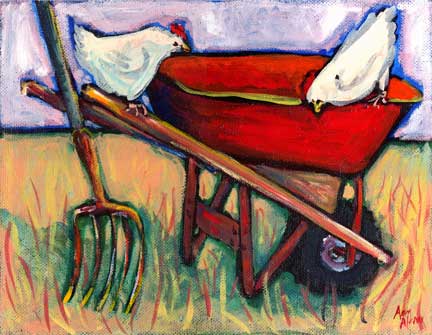
The Red Wheelbarrow


so much depends
upon

a red wheel
barrow

glazed with rain
water

beside the white
chickens.

ACTIVITY:
Students select a postcard or artwork.
Create an ekphrastic poem about your postcard using LINES and STANZAS!

Wednesday, April 5, 2017

Where I'm From--Assignment #3


AGENDA
FOR EXTRA CREDIT:
http://www.creativewritingprompts.com/


1. Work on "Where I'm From" poems which we will turn into a movie next week using Moviemaker by adding images and music.

Look over Examples:  

https://www.youtube.com/watch?v=lNs6r1TgNZE


https://www.youtube.com/watch?v=jyQ16OeECvc

2. Show video of original poem:
https://www.youtube.com/watch?v=ZdnHl_yW1dQ 

3. HANDOUT: Where I'm From template--Write your own "Where I'm From" poem in a Word or Google Doc using the model and the template

Monday, April 3, 2017

Writing Territories

Assignment #1 Making Lists/Assignment #2 Nonfiction

Use 12 pt. font  Times New Roman

MLA Heading (in left hand corner):

Your name
Teacher name
Course name (CW7)
Assignment/Date

Open a word document.  Put an MLA heading on top.  Create a full page of YOUR Writing Territories.  Save your document.

Assignment #1:  Writing Territories/Making Lists for Writing Topics
Don't try to figure out what other people want to hear from you; figure out what you have to say. It's the one and only thing you have to offer. ~ Barbara Kingsolver

In Collecting Your Writing Territories, Consider . . .and Make Lists of Ideas.  Brainstorm what you can write about.  Be specific.

memories: early, earlier, and recent                                favorites, now and then

obsessions                                                                    pets, now and then

idiosyncrasies                                                               teachers, now and then

problems                                                                      places: school, camp, trips, times away with friends and relatives
dreams                                                                         hobbies

itches                                                                            sports

understandings                                                              music

confusions                                                                    games

passions                                                                       books

sorrows                                                                        poems

risks                                                                             songs

accomplishments                                                           movies

fears                                                                             writers and artists

worries                                                                         food

fantasies                                                                       pet peeves

family, close and distant                                                beloved things-objects and possessions, now and then
friends, now and then                                                    all the loves of your life

fads


                                                       Adapted from Lessons That Change Writers by Nancie Atwell

Other ideas:

http://smoran.ednet.ns.ca/writing/writing_territories.htm

Welcome to CW7

AGENDA:

https://www.youtube.com/watch?v=1M5hs6ahcKU
"By awakening our imagination, art intensifies and complements our own experience. Art represents people, cultures, values, and perspectives on living, but it does much more. While bringing us pleasure, art teaches us. While reading or contemplating a painting our minds go elsewhere. We are taken on a journey into a world where form and meaning are intertwined.
Form matters and gives pleasure. How a work of art is organized — its technique, its verbal or visual texture, its way of telling — gives pleasure. So does the inextricable relation between form and content. The form of imaginative art, as well as the form of well-written non-fiction, organizes the mess (if not the chaos) of personal life as well as that of external events. Form not only organizes and controls art but also other bodies of knowledge within the humanities. Form imposes structure that our own lives — as we move from moment to moment through time — may lack.
Narrative — sequential telling — imposes form as it orders and gives shape. Indeed, in the sense that each of us is continually giving shape to the stories we tell to and about ourselves, there is continuity between what we read and see and our own lives. Put another way, what we read teaches us to find narratives within our own lives and hence helps us make sense of who we are. Our seeing shapes and patterns in stories and other kinds of art helps give interpretive order — in the form of a narrative that we understand — to our lives. We live in our narratives, our discourse, about our actions, thought, and feelings.
While there is always a gulf between imagined worlds and real ones, does not the continuity between reading lives and reading texts depend on our understanding reading as a means of sharpening our perceptions and deepen our insights about ourselves? Reading is a process of cognition that depends on actively organizing the phenomena of language both in the moment of perception and in the fuller understanding that develops retrospectively."
Daniel Schwartz, Huffington Post

Classroom expectations

1) Treat others as you would like to be treated.  RESPECT ALL NOUNS (People, objects, ideas)

2) Respect other people and their property (e.g., no hitting, no stealing).

3) Laugh with anyone, but laugh at no one.

4) Be responsible for your own learning.

5) Come to class and hand in assignments on time.

6) Do not disturb people who are working.

In addition:
No food or drink in classroom or computer lab.

No cell phones.